
OVERSIZED HVAC SYSTEMS
Why Oversized HVAC Systems Can Cost You More Money
Understand how oversized HVAC equipment affects system operation, comfort, and long-term costs in residential installations.
What Oversizing Means in Residential HVAC
An oversized HVAC system has more heating or cooling capacity than is appropriate for the home's calculated requirements under applicable equipment selection criteria. Bigger equipment is not automatically better, even when it can heat or cool the home quickly.
The capacity needed for a particular house depends on its insulation, windows, orientation, infiltration, ventilation, climate, and other building characteristics. Two homes with similar square footage may have substantially different loads.
ACCA Manual J establishes the calculated heating and cooling loads. ACCA Manual S uses those results and manufacturer performance data to evaluate equipment capacity at the relevant design conditions. Nominal tonnage alone does not establish whether a system is appropriately sized.
Oversizing can increase initial equipment costs and, depending on equipment type and controls, create operating disadvantages. The extent of those effects varies, so oversizing should be evaluated through proper calculations rather than assumed from equipment size alone.
Short-Cycling and Its Effects
Short cycling occurs when heating or cooling equipment starts and stops frequently instead of operating for an appropriate duration. Excess capacity can contribute to short cycling, particularly with single-stage equipment that operates at a fixed output.
Frequent cycling may reduce operating efficiency in some systems and can place additional demands on components involved in starting and stopping. However, actual effects depend on equipment design, control settings, system installation, and operating conditions.
Variable-capacity and multi-stage systems can adjust their output to better match changing loads. These capabilities may reduce some cycling problems, but they do not eliminate the need for proper equipment selection.
A larger system does not necessarily use more electricity or fuel in every home. The potential cost concern is that unnecessary capacity may increase purchase expense while providing no corresponding improvement in performance and, in some installations, may contribute to avoidable operating problems.
Humidity and Comfort Considerations
Air conditioning does more than lower indoor air temperature. During cooling operation, properly functioning equipment can also remove moisture from indoor air as water condenses on the cooling coil.
An oversized single-stage air conditioner may reach the thermostat setting quickly and shut off before achieving sufficient moisture removal under certain conditions. Occupants may experience cool but uncomfortable indoor conditions, particularly in humid climates.
Humidity performance also depends on indoor airflow, equipment characteristics, controls, outdoor conditions, and the building's moisture loads. Variable-capacity equipment and appropriate humidity controls can change how a system performs.
Oversizing is not the only cause of humidity problems, and reducing equipment capacity is not a universal solution. Accurate Manual J calculations and Manual S equipment selection help establish a sound starting point for evaluating both sensible cooling and moisture-removal performance.
How a Load Calculation Supports Appropriate Sizing
Oversized equipment may cost more to purchase, and related installation components may also be affected by the selected equipment. The financial impact depends on the equipment, ductwork, project conditions, and available product options.
When system capacity is selected without an accurate load calculation, homeowners may pay for capacity they do not need. If the system later develops comfort or airflow problems, diagnosing and correcting those issues can add expense.
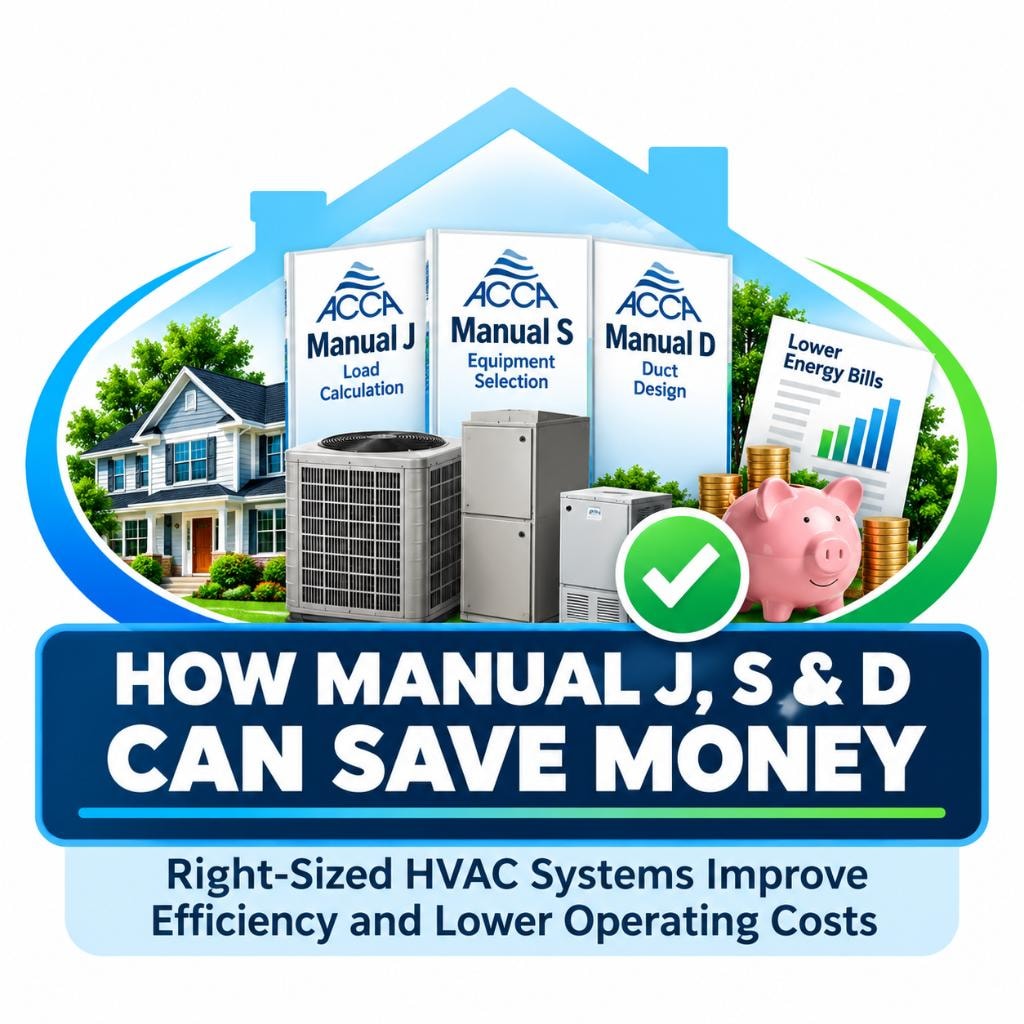
Proper HVAC design begins with Manual J load calculations, continues with Manual S equipment selection, and includes Manual D duct design when a duct system is involved. These procedures help coordinate the building loads, equipment capabilities, and required air distribution before installation.
Correct sizing does not guarantee lower utility bills or eliminate maintenance and repair costs. It helps reduce avoidable sizing errors and supports informed decisions about initial investment, operating performance, comfort, and potential long-term expenses.
Technical References

About the Author, Tracy Savoy
Tracy Savoy, owner of Savoy Engineering Group, has worked with residential HVAC design since 2005. Her ACCA Manual J, S, and D training and Wrightsoft experience inform her practical guidance on the purchase costs and operating problems that oversized equipment can create.
View Tracy's Training & Experience