
HVAC DESIGN & EQUIPMENT LIFE
How Proper HVAC Design Can Extend Equipment Life
Explore how equipment sizing and system design relate to operating patterns and the conditions that affect residential HVAC equipment over time.
How Equipment Sizing Affects Operating Patterns
Residential heating and cooling equipment operates in response to the building's heating and cooling demands. Proper equipment selection helps match available capacity to the calculated loads under the applicable design conditions.
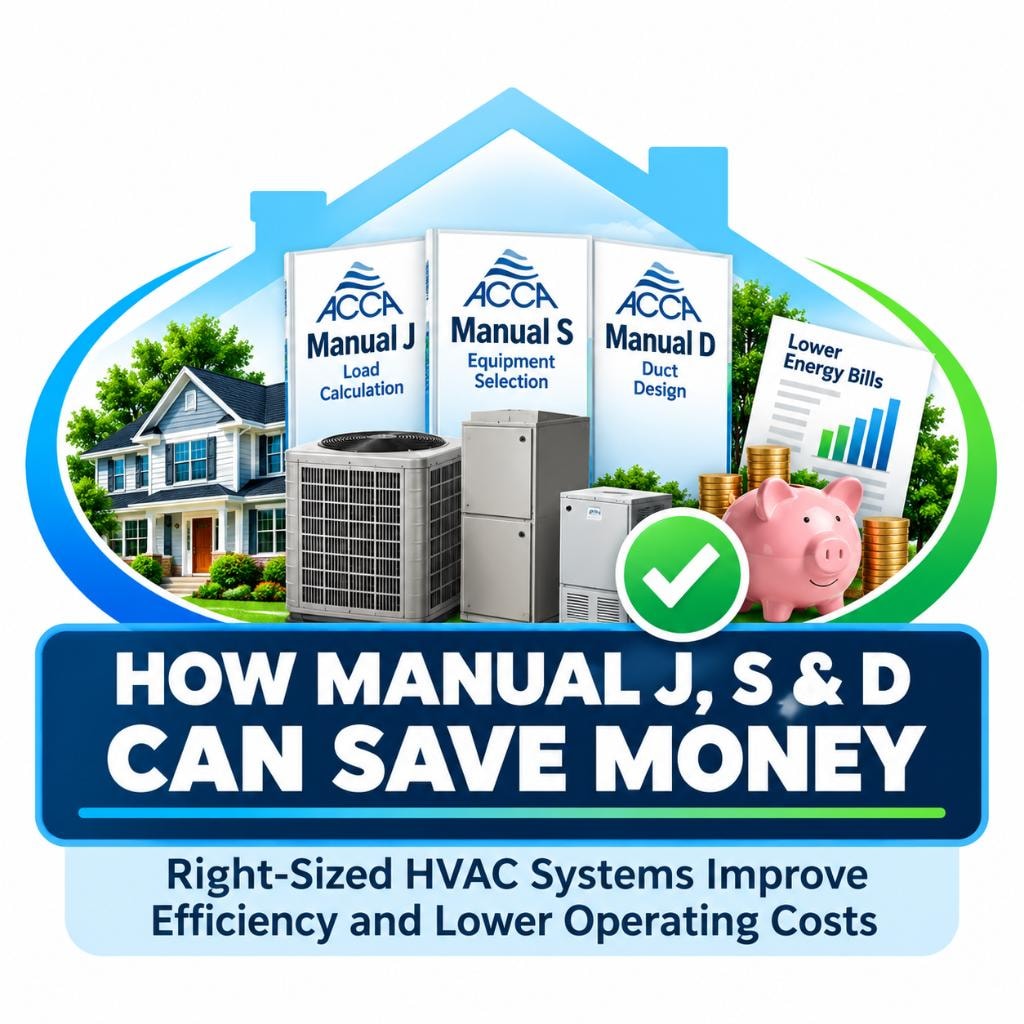
ACCA Manual J establishes the building's heating and cooling loads, while ACCA Manual S evaluates equipment using manufacturer performance information and applicable selection criteria. These procedures help avoid selecting equipment solely by square footage or the size of an existing system.
Equipment with excessive capacity may satisfy a thermostat call quickly and cycle off, particularly when it operates at a single fixed capacity. Variable-capacity equipment can respond differently because it may adjust its output as building demand changes.
Long operating cycles are not automatically harmful or evidence of undersizing. Properly selected equipment may operate continuously near peak design conditions. Operating patterns must be evaluated in relation to equipment characteristics, outdoor conditions, and manufacturer requirements.
Short-Cycling and Its Effects on Equipment
Short cycling occurs when heating or cooling equipment repeatedly starts and stops after unusually brief operating periods. It can result from excessive equipment capacity, but thermostat placement, control problems, airflow restrictions, and other faults may also contribute.
Frequent cycling can increase the number of starts experienced by motors, compressors, and associated electrical components. Depending on equipment design and operating conditions, repeated starts may contribute to unnecessary wear or reduced operating efficiency.
In cooling systems, short run times may also limit moisture removal, particularly where latent cooling demand is significant. The severity of these effects depends on system type, controls, airflow, and climate.
A properly completed Manual J and Manual S can reduce the risk of design-related oversizing. However, short cycling must be diagnosed rather than automatically attributed to equipment size, and correct installation and controls remain essential.
How Duct System Performance Affects Equipment Operation
Ducted HVAC systems require adequate airflow through the equipment and into the conditioned rooms. A poorly designed duct system may create excessive static pressure, restricted airflow, or uneven distribution.
Airflow outside the equipment manufacturer's specified operating range can affect heating and cooling performance. Depending on system type, inadequate airflow may contribute to abnormal operating temperatures, protective shutdowns, or other operating problems.
ACCA Manual D uses room airflow requirements, available static pressure, and duct system resistance to develop an appropriate duct layout and sizing approach. This helps coordinate the distribution system with the selected equipment.
Duct design alone does not guarantee proper operation. The installing contractor must construct, seal, insulate, and verify the system as required. Appropriate filtration, maintenance, and field airflow measurements also help support reliable operation.
The Role of Design in Long-Term System Performance
The service life of residential HVAC equipment depends on multiple factors, including manufacturing quality, installation, maintenance, climate, usage, and operating conditions. No load calculation or equipment selection procedure can guarantee a specific lifespan.
Coordinated Manual J, Manual S, and Manual D procedures establish a technical basis for selecting equipment and designing ductwork that meet the home's calculated requirements. This can help avoid preventable sizing and distribution problems before installation.
Reducing avoidable short cycling, airflow restrictions, and inappropriate equipment selection may help limit certain operating stresses. Nevertheless, normal wear, component failures, environmental exposure, and maintenance practices continue to affect equipment longevity.
A documented HVAC design is therefore one part of protecting a homeowner's investment. Its value lies in supporting appropriate equipment operation and reducing avoidable design-related risks, rather than promising a particular number of additional service years.
Technical References

About the Author, Tracy Savoy
Tracy Savoy provides independent residential Manual J, S, and D services through Savoy Engineering Group at Load-Calculations.com. Her ACCA training and Wrightsoft experience since 2005 inform her practical guidance on how appropriate sizing, airflow planning, and reduced cycling may affect equipment wear over time.
View Tracy's Training & Experience